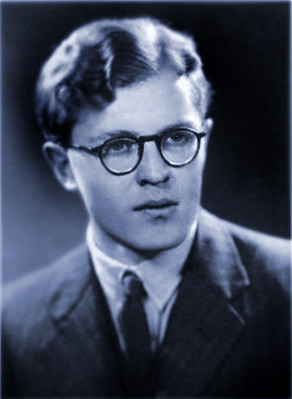
Douglas Lilburn

Artist

Douglas Lilburn

3

Releases

 Favorite

About

Douglas Lilburn (1915-2001) has been described as the "grandfather of New Zealand music," having worked in both conventional classical styles as well as pioneering electro-acoustic music in New Zealand. He was born in Wanganui, New Zealand, in 1915, and began studying music in 1937 at the Royal College of Music, London, where he was tutored in composition by Ralph Vaughan Williams. Returning to New Zealand in 1940, he was guest conductor in Wellington for three months with the NBS String Orchestra before moving to Christchurch in 1941, where he worked as a freelance composer and teacher until 1947. Between 1946 and 1949, and again in 1951, Lilburn was Composer-in-Residence at the Cambridge Summer Music Schools.

In 1947, Lilburn returned to Wellington to take up a position at Victoria University as part-time tutor in music. He was appointed full-time Lecturer in 1949 and Senior Lecturer in 1955; becoming Associate Professor of Music in 1963, and Professor with a personal chair in Music in 1970. In 1966, Lilburn founded the Victoria University of Wellington Electronic Music Studio and was its director until 1979, a year before his retirement. Having written a considerable body of music for conventional acoustic instruments, he rejected the medium and used the studio for the creation of wholly electronic works. He was arguably the first New Zealand composer to explore the kinds of electronic and electro-acoustic forms being pioneered in Europe’s avant-garde, and felt they would more accurately portray New Zealand in its own right, without reference to culturally-loaded European musical instruments and forms. Some works were purely electronic; others were inspired by natural sounds, making field recordings of beaches, lakes, rivers and natural bush and manipulating them electronically to produce a music that captured the natural spectrum of Aotearoa’s soundscape. Other works interpreted the words of leading New Zealand writers such as Allen Curnow, Denis Glover and Alistair Campbell.

Douglas Lilburn died peacefully at his home in Wellington on 6 June 2001.

Data provided by Discogs

Top Tracks

Most popular songs on Last.fm · click ▶ to preview on Spotify

1

Processional Fanfare

Douglas Lilburn

2

Aotearoa

Douglas Lilburn

3

A Birthday Offering

Douglas Lilburn

4

Forest

Douglas Lilburn

5

Poem in Time of War

Douglas Lilburn

Setlists

No setlists found yet · refresh to fetch from Setlist.fm

All · 0

Setlist data provided by Setlist.fm

No setlists found.

Missing a show? Setlists sync automatically every 7 days.

Community Feed

Posts from fans about this artist

🎟️ Upcoming Shows

No upcoming shows. Follow to get notified when new dates are announced.

Concert Tickets available at StubHub!

People Also Ask

Douglas Lilburn has released 3 albums between 1969 and 2006. Notable releases include A Song Of Islands / Aotearoa Overture / Forest, Symphony No. 2 / Aotearoa Overture / Diversions For String Orchestra, Aotearoa Overture / Third Symphony / Symphony. Explore their complete discography on this page.

Douglas Lilburn's most-played tracks include Processional Fanfare, Aotearoa, A Birthday Offering, Forest, Poem in Time of War. Listen to these songs and explore more from their catalog on this page.

Douglas Lilburn (1915-2001) has been described as the "grandfather of New Zealand music," having worked in both conventional classical styles as well as pioneering electro-acoustic music in New Zealand. He was born in Wanganui, New Zealand, in 1915,... Read the full biography on this page.

You can find Douglas Lilburn vinyl records, CDs and collectibles on eBay. Browse the selection of new and used releases available for purchase.

Join the community

Follow Douglas Lilburn

Get notified about new tour dates, releases, and updates. Join thousands of fans tracking their favorite bands.

Free forever · No credit card required

Follow Douglas Lilburn